
Journal
Stories, ideas, and field notes from T2.

Takumi Ishiyama
JAPAN NOTS
Running Through Hidden Japan
For runners and hikers visiting Japan, the city and the mountains are often perceived as separate.
In urban settings, people run on well-maintained routes, while trails are destinations that lead toward summits.
However, in Hadano, those boundaries gently dissolve, and nature quietly integrates into everyday life.
The mountains rising behind the town, the water emerging from beneath your feet,
and the shifting light and air through the seasons—
these are all things you can encounter through running.
In Episode 1, Part 2 of Japan Nots, we focus on the “nature” of Hadano, a town at the foot of the Omote-Tanzawa range.
Through the lens of photographer Takumi Ishiyama, we explore landscapes that exist in continuity with the town,
and the sense of time that quietly lives within them.This installment centers on the core theme of “nature.”
For runners and hikers visiting Japan, the city and the mountains are often perceived as separate.
In urban settings, people run on well-maintained routes, while trails are destinations that lead toward summits.
However, in Hadano, those boundaries gently dissolve, and nature quietly integrates into everyday life.
The mountains rising behind the town, the water emerging from beneath your feet, and the shifting light and air through the seasons—
these are all things you can encounter through running.
In Episode 1, Part 2 of Japan Nots, we focus on the “nature” of Hadano, a town at the foot of the Omote-Tanzawa range.
Through the lens of photographer Takumi Ishiyama, we explore landscapes that exist in continuity with the town,
and the sense of time that quietly lives within them.
This installment centers on the core theme of “nature.”
Episode 1 : Hadano
Where Nature Meets the Town






A Town Shaped by Nature
Stepping into the mist.
Morning in Hadano slowly unravels, its contours still unnamed.
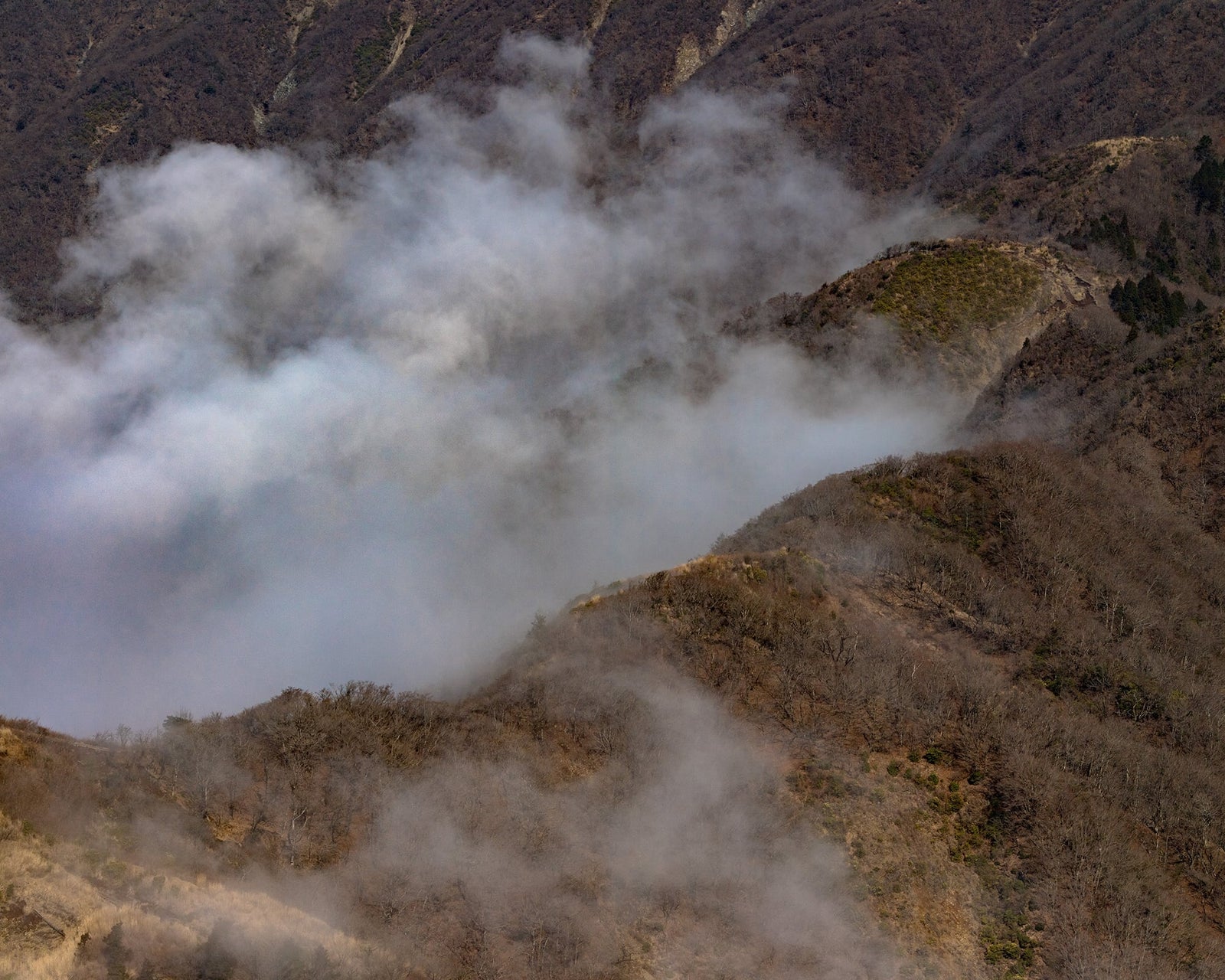
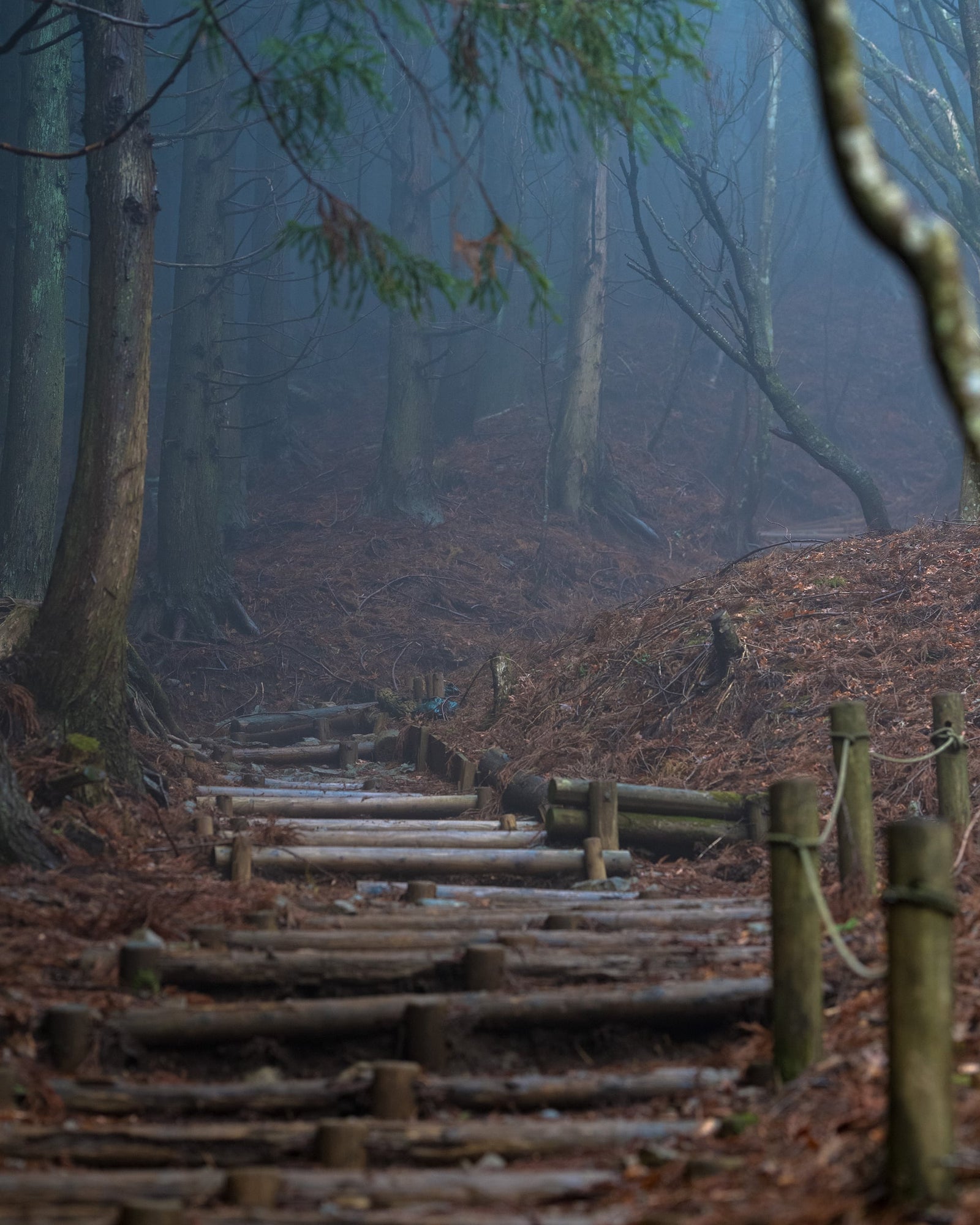
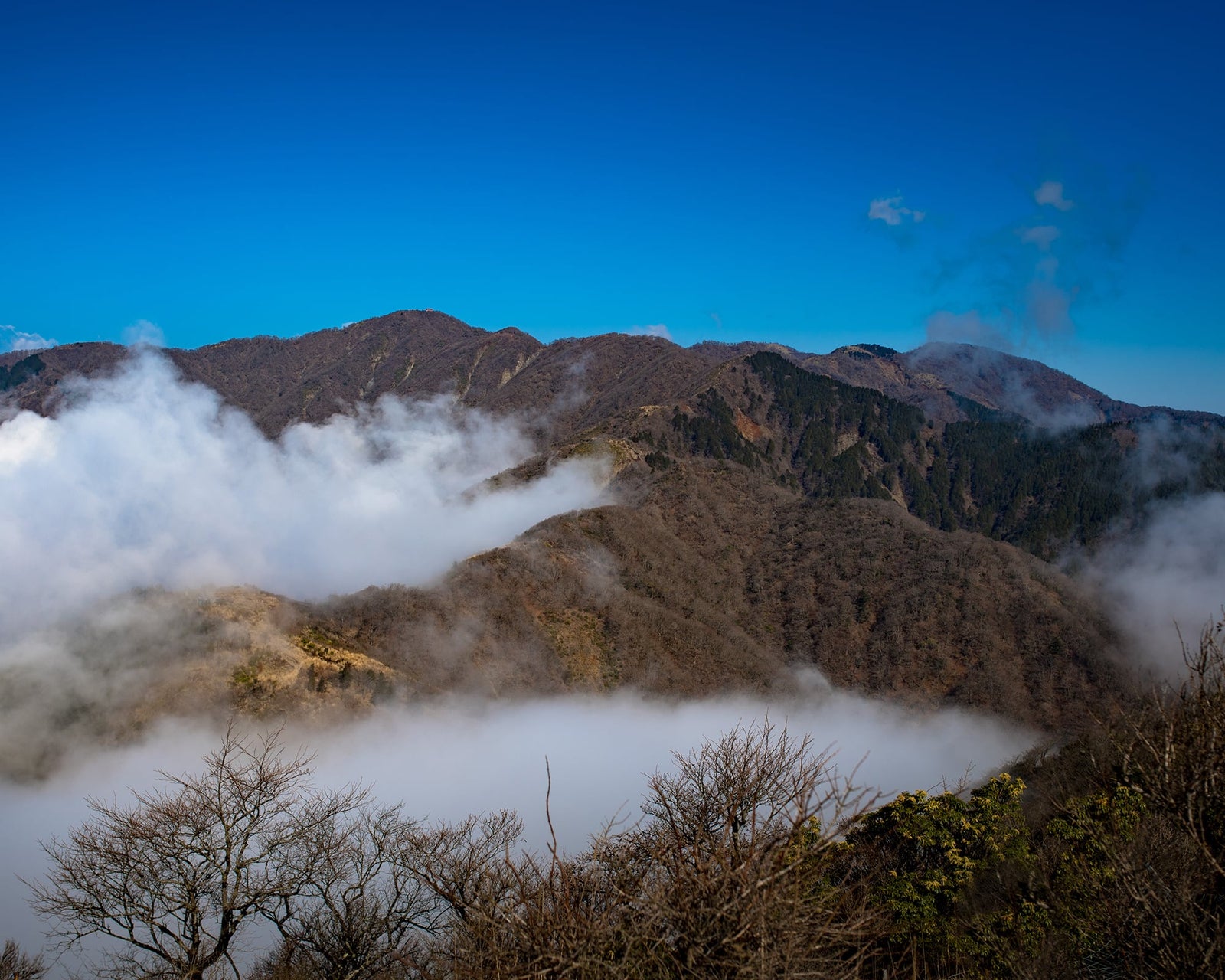
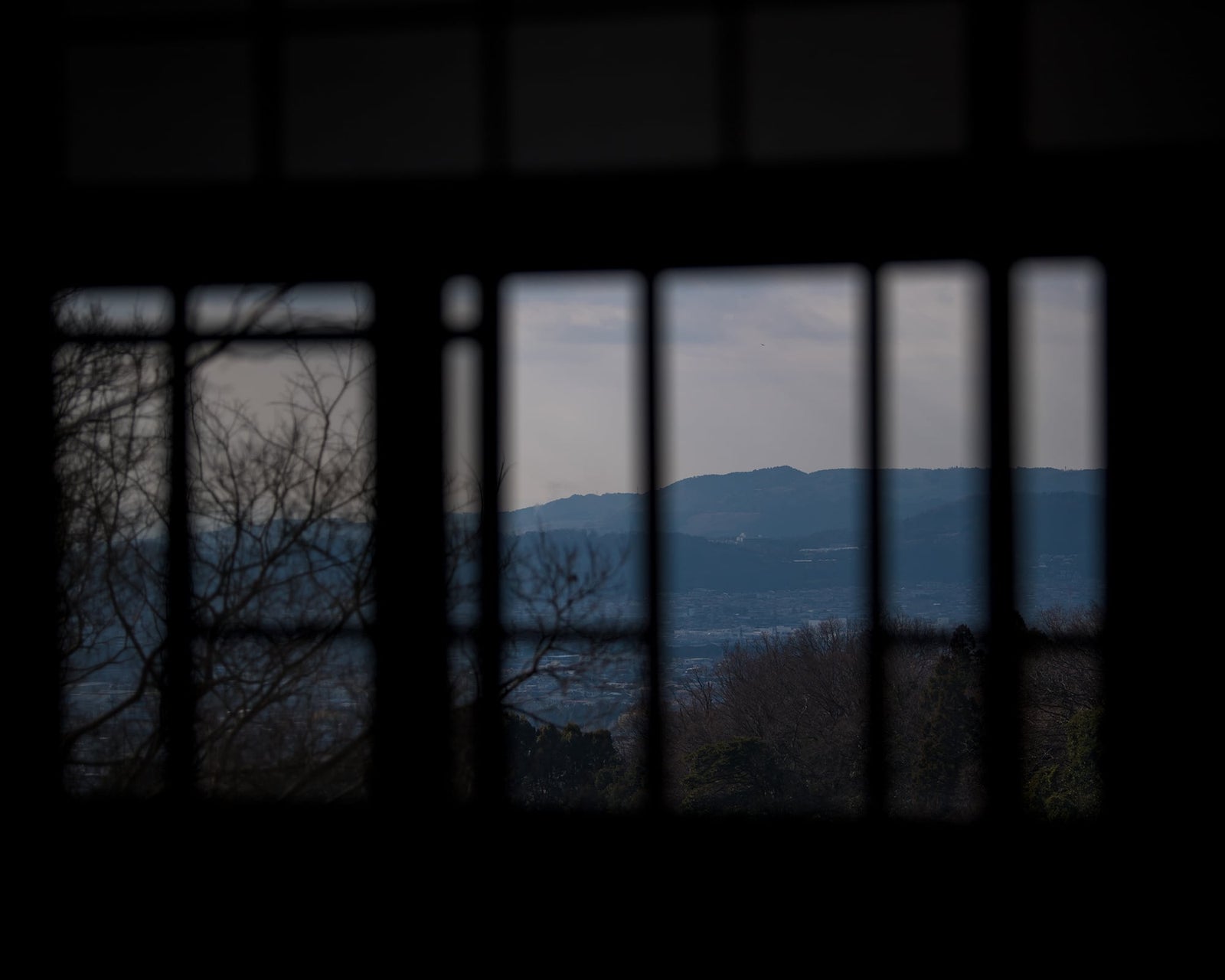
With the presence of the town at my back, the path leading into the mountains is unexpectedly close—before I know it, I am already inside a forest wrapped in white fog.
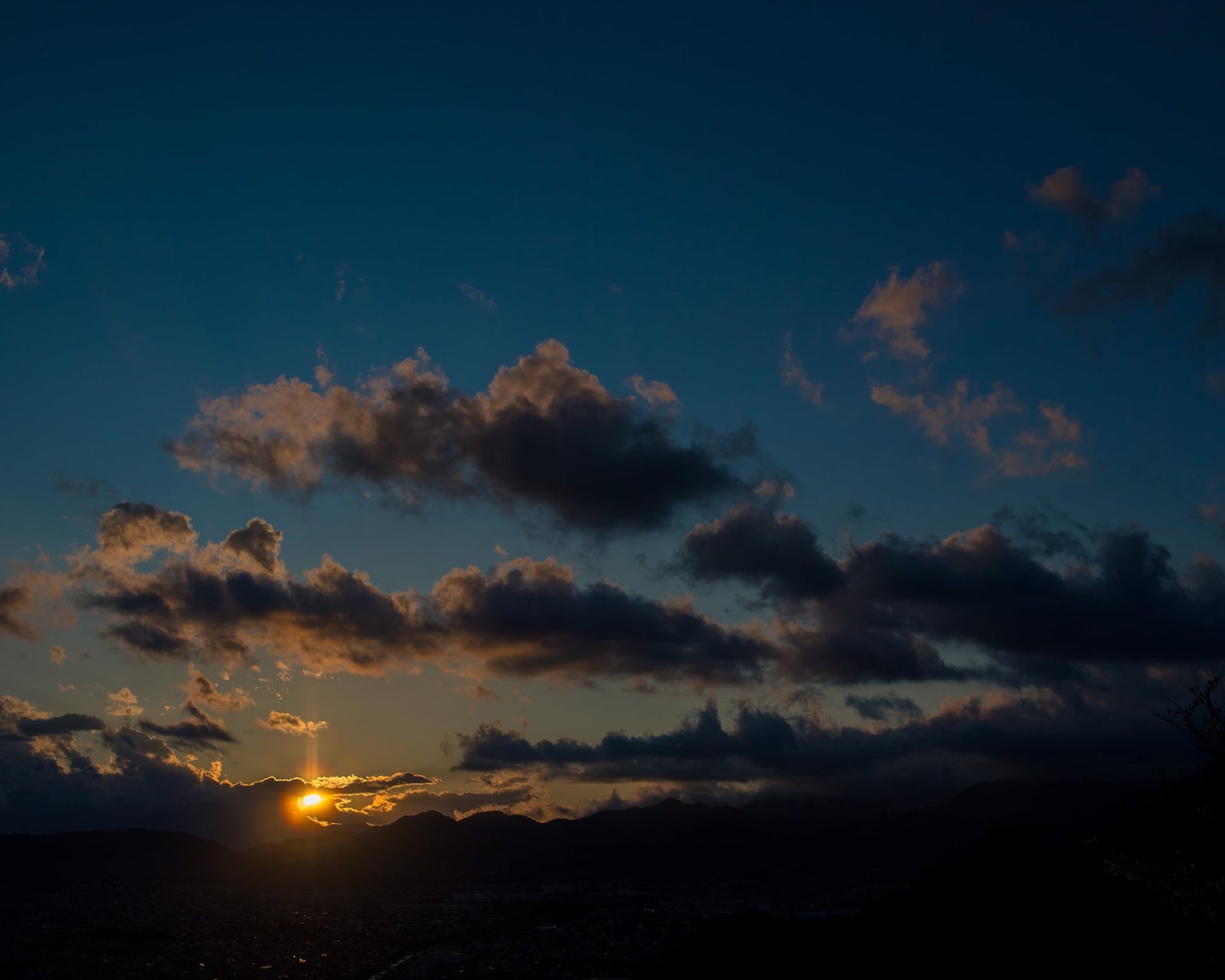
Within the shadows that still hold the chill of winter, a soft light begins to filter through, revealing the first signs of new growth.
The season is quietly turning, moving on to its next page.
With each step, only the sound of my own rough breathing fills the world. Everything else is stripped away, leaving nothing but the rhythm that carries me forward.
And yet, the moment I pause, that silence reverses itself. The space that once felt sealed is suddenly filled with the chorus of birds.
At last, I reach the summit, and the view opens.
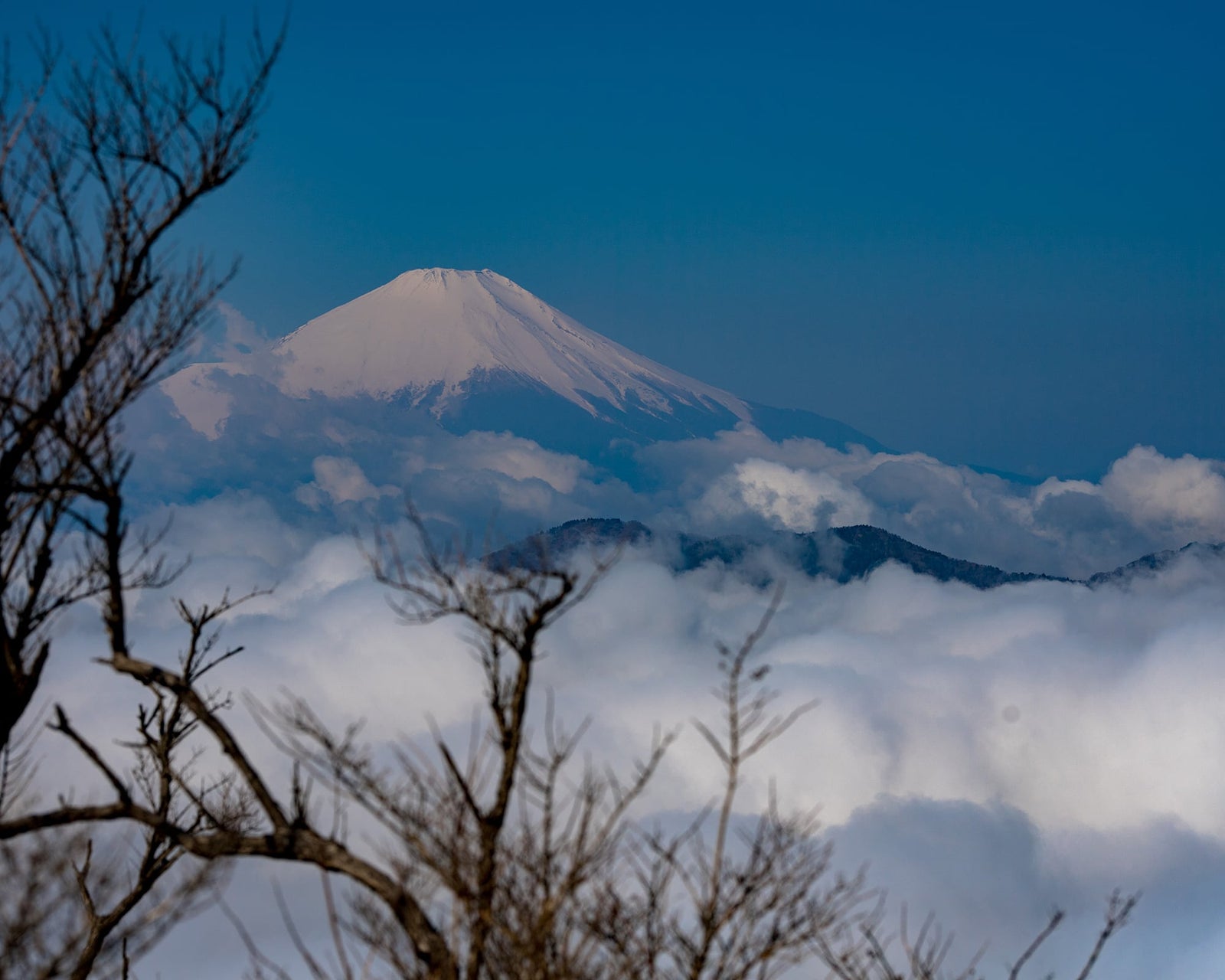
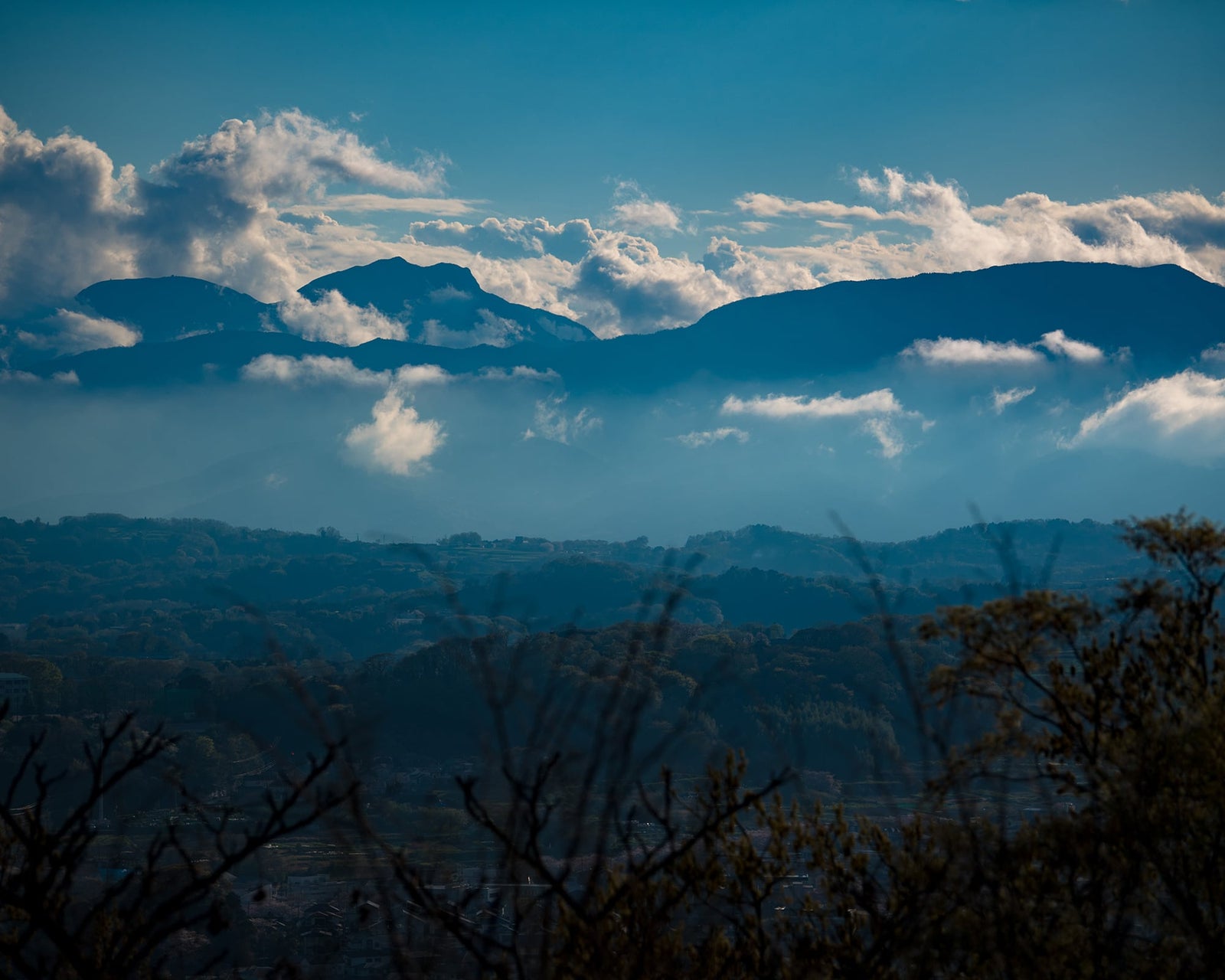
At my feet spreads a sea of clouds—layers of white drifting, overlapping, dissolving—quietly telling the story of time in this land.
To walk and run here is not about competition. It is an extension of an unbroken rhythm, repeated over time by countless unnamed people.
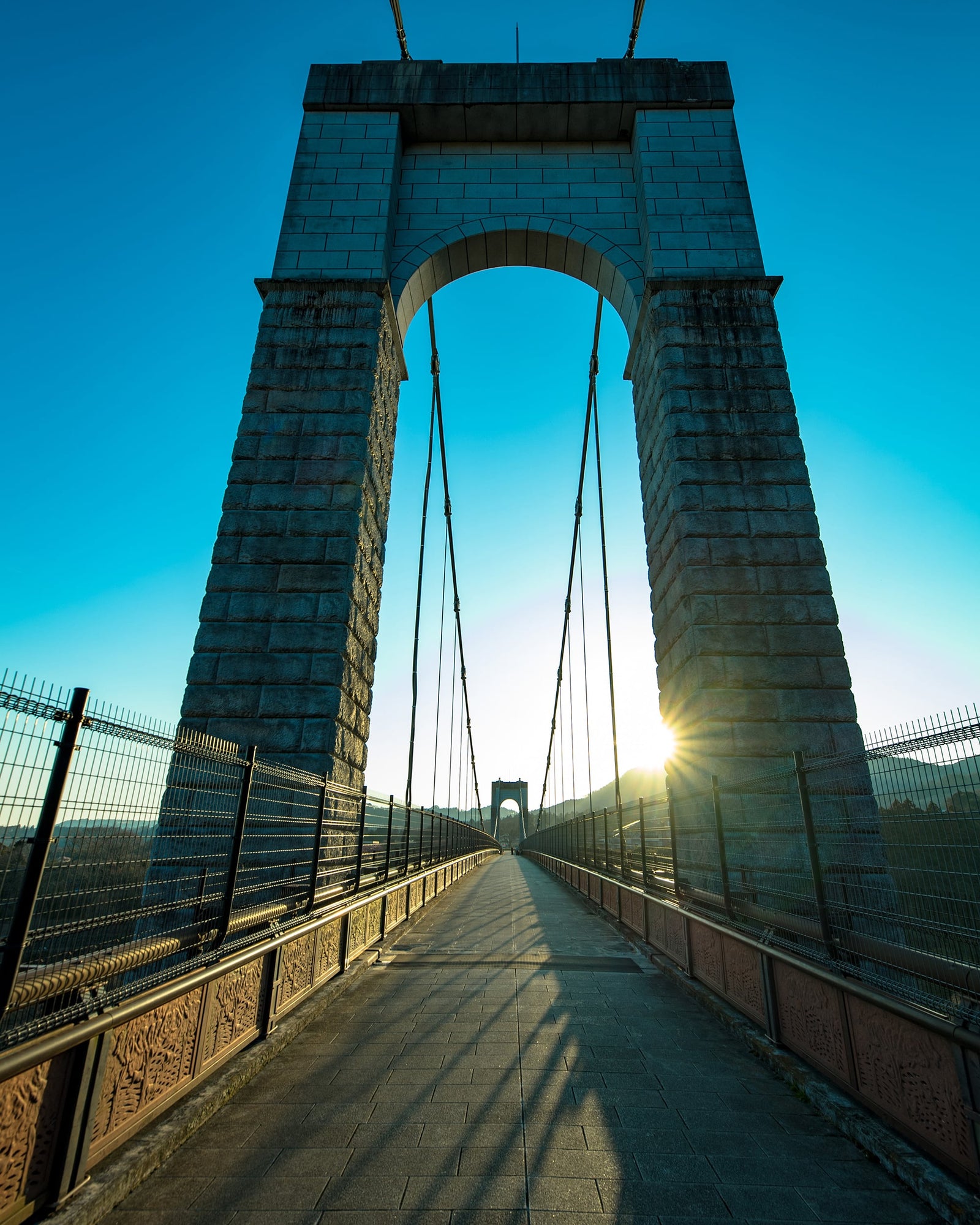
A nature that lives deep within daily life, beyond the reach of tourism. That flow becomes water, becomes the food of Hadano, and returns once again to the body.
Guided by the scent of the fields, brushing against the presence of spring water, the path I run eventually leads to the table.
Running, walking, and eating are all connected as part of a single, continuous flow.
After the run, the clarity of the water and its quiet abundance soak into the body.
The contours of Hadano gradually settle within me.
Here, there is a terroir—quietly rooted in the lives of runners and hikers.
Stepping into the mist.
Morning in Hadano slowly unravels, its contours still unnamed.
With the presence of the town at my back, the path leading into the mountains is unexpectedly close—before I know it, I am already inside a forest wrapped in white fog.
Within the shadows that still hold the chill of winter, a soft light begins to filter through, revealing the first signs of new growth.
The season is quietly turning, moving on to its next page.
With each step, only the sound of my own rough breathing fills the world. Everything else is stripped away, leaving nothing but the rhythm that carries me forward.
And yet, the moment I pause, that silence reverses itself. The space that once felt sealed is suddenly filled with the chorus of birds.
At last, I reach the summit, and the view opens.
At my feet spreads a sea of clouds—layers of white drifting, overlapping, dissolving—quietly telling the story of time in this land.
To walk and run here is not about competition. It is an extension of an unbroken rhythm, repeated over time by countless unnamed people.
A nature that lives deep within daily life, beyond the reach of tourism. That flow becomes water, becomes the food of Hadano, and returns once again to the body.
Guided by the scent of the fields, brushing against the presence of spring water, the path I run eventually leads to the table.
Running, walking, and eating are all connected as part of a single, continuous flow.
After the run, the clarity of the water and its quiet abundance soak into the body.
The contours of Hadano gradually settle within me.
Here, there is a terroir—quietly rooted in the lives of runners and hikers.

Takumi Ishiyama
Born in 1973 in Tokyo, where he continues to live and work. An amateur photographer who discovered photography through his work with a camera manufacturer that was once his client. Since then, he has pursued photography independently, immersing himself in the craft.
While working as an official photographer for trail running events, he continues to capture runners through a poetic lens, portraying their freshness and presence in motion. His Instagram account, which also serves as his portfolio, offers a glimpse into Japan’s running culture and community.
https://www.instagram.com/isymtkm/


Takumi Ishiyama
Born in 1973 in Tokyo, where he continues to live and work. An amateur photographer who discovered photography through his work with a camera manufacturer that was once his client. Since then, he has pursued photography independently, immersing himself in the craft.
While working as an official photographer for trail running events, he continues to capture runners through a poetic lens, portraying their freshness and presence in motion. His Instagram account, which also serves as his portfolio, offers a glimpse into Japan’s running culture and community.
https://www.instagram.com/isymtkm/
About Hadano
Hadano is a city at the foothills of the Omote-Tanzawa mountains,
about one hour by train from central Tokyo.
Set in a basin surrounded by hills and mountain ridgelines,
the city is known for its abundant natural spring water,
which has supported daily life here for generations.
For runners, Hadano offers a variety of accessible routes,
from quiet town streets and paths along the Mizunashi River to trails
that lead directly into the Omote-Tanzawa mountains.
From the city, runners can reach trailheads for
well-known peaks such as Mt. Tonodake and Mt. Nabewari.
The area also includes classic running and cycling routes such as Yabitsu Pass,
where many athletes gather to test themselves, and the Shibusawa Hills,
where runners can move along the ridgeline with expansive views of Omote-Tanzawa.
Together, these landscapes offer terrain that can be enjoyed by
both serious mountain runners and casual runners alike.
Getting There
From Shinjuku Station, take the Odakyu Line Express to Hadano Station (approximately 70 minutes).
From the station, the landscape quickly opens from town streets toward the mountains.
Run Info
Distance : 15–25 km
Elevation gain : 400–1200 m
Terrain : road / trail mix
Highlights : Mt. Tonodake routes,
Yabitsu Pass climb,
natural spring water spots in town
About Hadano
Hadano is a city at the foothills of the Omote-Tanzawa mountains,
about one hour by train from central Tokyo.
Set in a basin surrounded by hills and mountain ridgelines,
the city is known for its abundant natural spring water,
which has supported daily life here for generations.
For runners, Hadano offers a variety of accessible routes,
from quiet town streets and paths along the Mizunashi River to trails
that lead directly into the Omote-Tanzawa mountains.
From the city, runners can reach trailheads for
well-known peaks such as Mt. Tonodake and Mt. Nabewari.
The area also includes classic running and cycling routes such as Yabitsu Pass,
where many athletes gather to test themselves, and the Shibusawa Hills,
where runners can move along the ridgeline with expansive views of Omote-Tanzawa.
Together, these landscapes offer terrain that can be enjoyed by
both serious mountain runners and casual runners alike.
Getting There
From Shinjuku Station, take the Odakyu Line Express to Hadano Station (approximately 70 minutes).
From the station, the landscape quickly opens from town streets toward the mountains.
Run Info
Distance : 15–25 km
Elevation gain : 400–1200 m
Terrain : road / trail mix
Highlights : Mt. Tonodake routes,
Yabitsu Pass climb,
natural spring water spots in town
With support from
Kanei Shuzoten
Masashi Sato
Akito Nagao