
Journal
Stories, ideas, and field notes from T2.

Inside the Design
— The thinking behind T2 gear
Text by Saori Hase
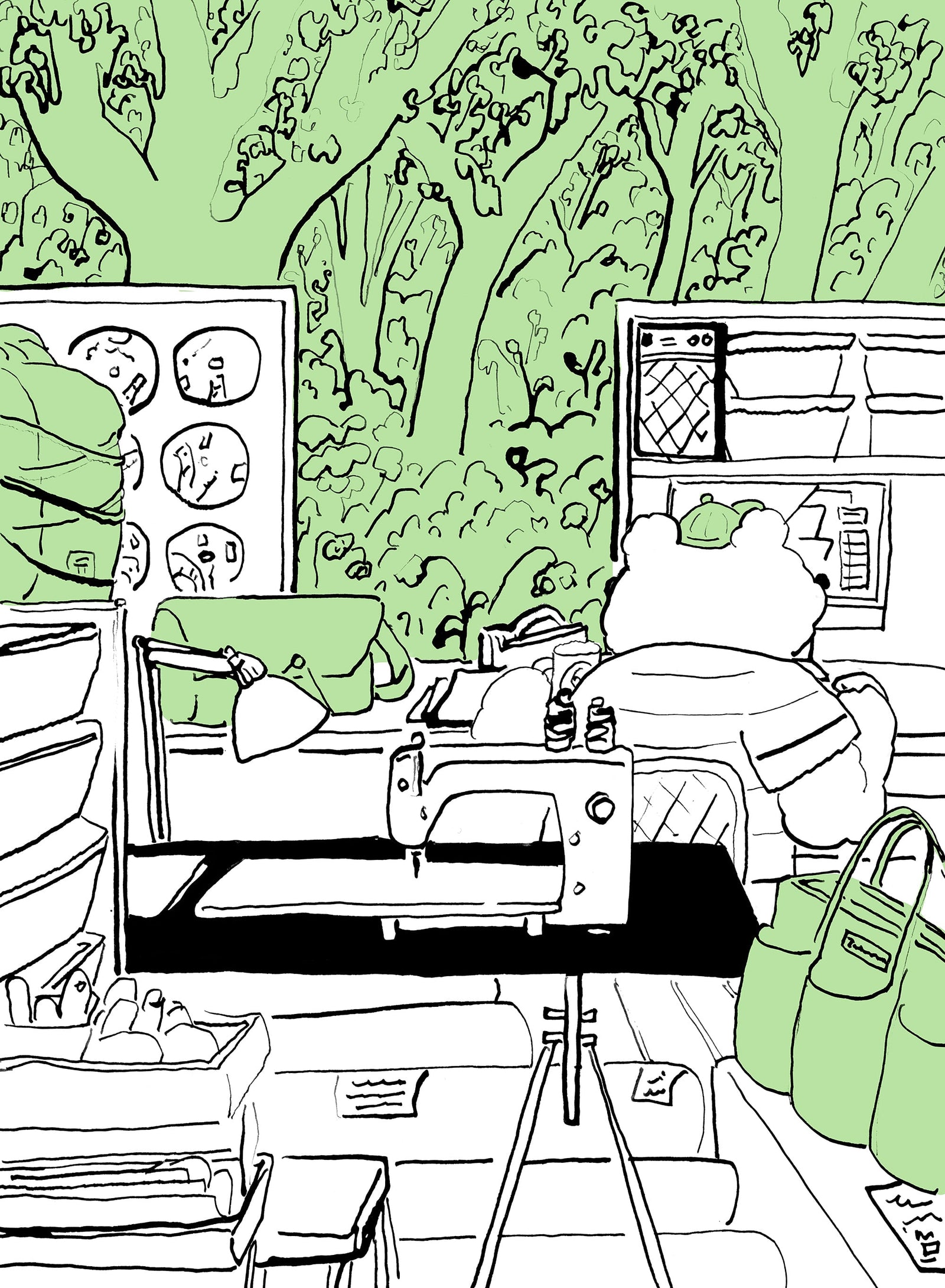
Illustration by Heisuke Kitazawa
Inside the Design is an ongoing series by writer and ultrarunner Chiori Hase,
who has developed a unique perspective on design through years of experience in the fashion industry.
Through the lens of design, she explores the products of Tabisuke Tabizo
—from the brand's pursuit of optimal fit through technical development and pattern engineering,
to the selection of materials and colors, and the manufacturing methods adopted along the way.
Through each product, the series offers a look inside the design process taking place
at the T2 Kita-Kamakura Design Studio.
In Chapter 2 of Episode 1, we take a closer look inside the fitting of the T2 Ultra Belt.
Inside the Design is an ongoing series by writer and ultrarunner Saori Hase, who has developed a unique perspective on design through years of experience in the fashion industry.
Through the lens of design, she explores the products of Tabisuke Tabizo—from the brand's pursuit of optimal fit through technical development and pattern engineering, to the selection of materials and colors, and the manufacturing methods adopted along the way.
Through each product, the series offers a look inside the design process taking place at the T2 Kita-Kamakura Design Studio.
In Chapter 2 of Episode 1, we take a closer look inside the fitting of the T2 Ultra Belt.
Episode 1
T2 Ultra Belt
Chapter 2: Fitting

Seven Sizes
One spring day in 2026.
I was so absorbed in my work that I almost forgot to breathe.
The utility knife in my hand felt like an extension of my right arm as I worked on the patterns for the T2 Ultra Belt, whose production was finally about to begin.
The accuracy of this process would have a significant impact on the finished product. I tried not to let the pressure distract me.
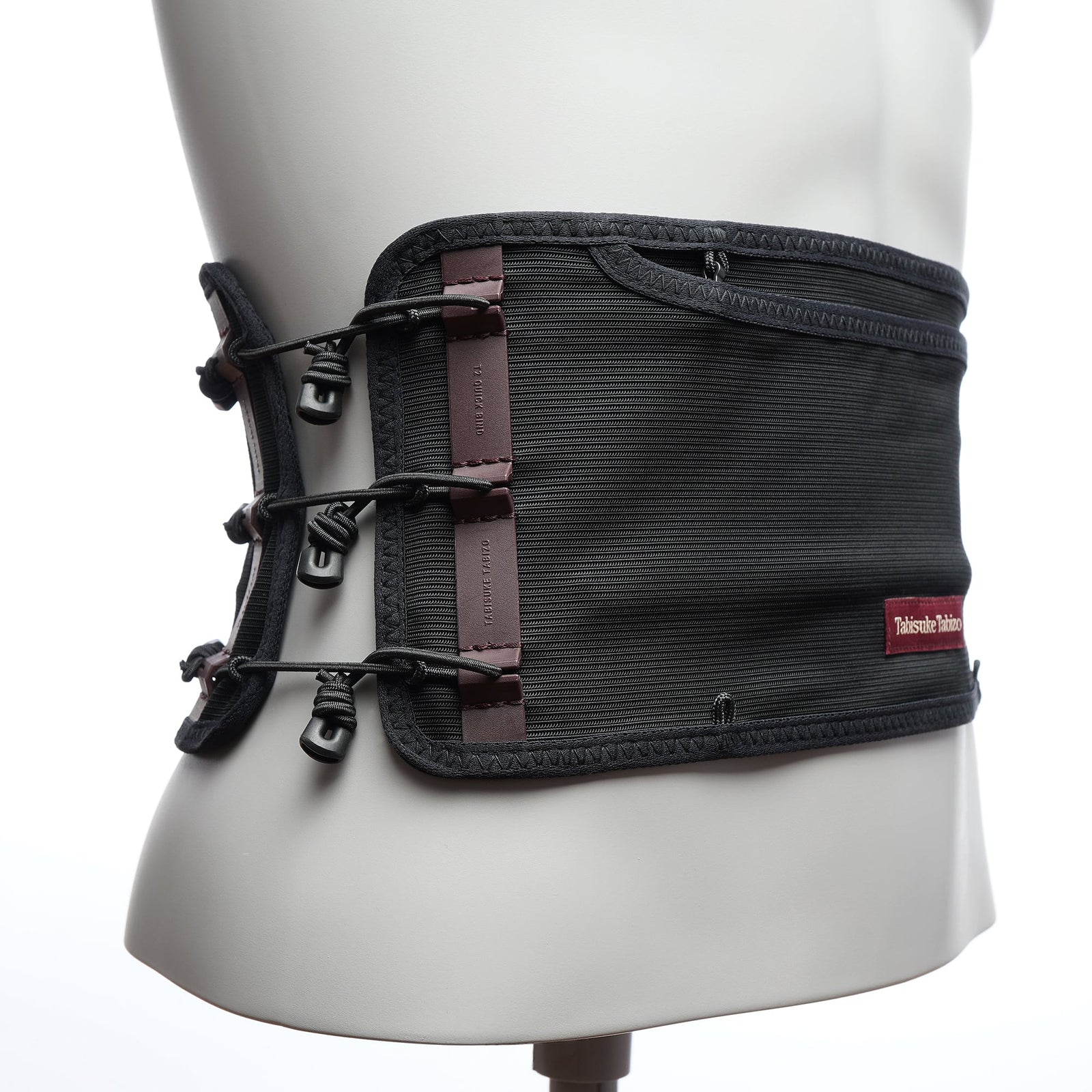
Spread across the table were seven patterns, ranging from XXS to XXL.
Looking at them side by side, the difference in size was so striking that it almost felt as if they belonged to a child and an adult.
This chapter focuses on the development of the T2 Ultra Belt, which began with the XS size of the T2 Ultra 10 introduced in the previous chapter. More specifically, it explores the idea that became central to its development: fitting.
Most running belts are offered either in a single size or in two to three sizes. Their structures tend to follow familiar formats as well, often relying on adjustable belts or tubular, wraparound constructions.
At a time when both sizing and design have become increasingly standardized, the T2 Ultra Belt was developed with fitting itself placed at the center of the design process, exploring a different approach to what a running belt could be.
I was so absorbed in my work that I almost forgot to breathe.
The utility knife in my hand felt like an extension of my right arm as I worked on the patterns for the T2 Ultra Belt, whose production was finally about to begin.
The accuracy of this process would have a significant impact on the finished product. I tried not to let the pressure distract me.
Spread across the table were seven patterns, ranging from XXS to XXL.
Looking at them side by side, the difference in size was so striking that it almost felt as if they belonged to a child and an adult.
This chapter focuses on the development of the T2 Ultra Belt, which began with the XS size of the T2 Ultra 10 introduced in the previous chapter. More specifically, it explores the idea that became central to its development: fitting.
Most running belts are offered either in a single size or in two to three sizes. Their structures tend to follow familiar formats as well, often relying on adjustable belts or tubular, wraparound constructions.
At a time when both sizing and design have become increasingly standardized, the T2 Ultra Belt was developed with fitting itself placed at the center of the design process, exploring a different approach to what a running belt could be.
The Core of Development: Fitting
The Core of Development: Fitting
The elements that make up fitting can largely be divided into three categories:
•Size
•Fabric stretch and kickback
•Adjusters
Let's begin with size.
Products from Tabisuke Tabizo are not only sold within Japan. From the T2 Kita-Kamakura Design Studio, they travel across the ocean to runners throughout North America, Europe, and beyond.
For this reason, the brand's sizing is designed to accommodate a wide range of runners, spanning XS through XL.
The T2 Ultra Belt, however, goes a step further, adding an XXL size for larger runners and an XXS size for those requiring a smaller fit.
“Wait... not five sizes, but seven?”
I found myself asking again in surprise. For a running belt, the number of sizes was highly unusual.
Rather than relying solely on adjusters, the design team sought to achieve a more precise fit through sizing itself. After repeated experimentation—including revisions to the grading intervals between sizes—the T2 Ultra Belt ultimately became available in seven sizes, covering everything from XXS to XXL.
The elements that make up fitting can largely be divided into three categories:
•Size
•Fabric stretch and kickback
•Adjusters
Let's begin with size.
Products from Tabisuke Tabizo are not only sold within Japan. From the T2 Kita-Kamakura Design Studio, they travel across the ocean to runners throughout North America, Europe, and beyond.
For this reason, the brand's sizing is designed to accommodate a wide range of runners, spanning XS through XL.
The T2 Ultra Belt, however, goes a step further, adding an XXL size for larger runners and an XXS size for those requiring a smaller fit.
“Wait... not five sizes, but seven?”
I found myself asking again in surprise. For a running belt, the number of sizes was highly unusual.
Rather than relying solely on adjusters, the design team sought to achieve a more precise fit through sizing itself. After repeated experimentation—including revisions to the grading intervals between sizes—the T2 Ultra Belt ultimately became available in seven sizes, covering everything from XXS to XXL.

A Fabric That Stretches Horizontally
The T2 Ultra Belt was conceived as a belt capable of securely carrying hydration and a smartphone, whether on trails, on the track, or during a road marathon.
As mentioned previously, the initial mock-ups were developed using the same 4-way stretch fabric employed in the T2 Ultra 10. While the fabric provided a comfortable fit, it also revealed a problem. When soft flasks were inserted, the material deformed around the contents, and bounce could not be sufficiently controlled.
Various materials—including power mesh and woven fabrics—were tested, but none fully met the requirements.
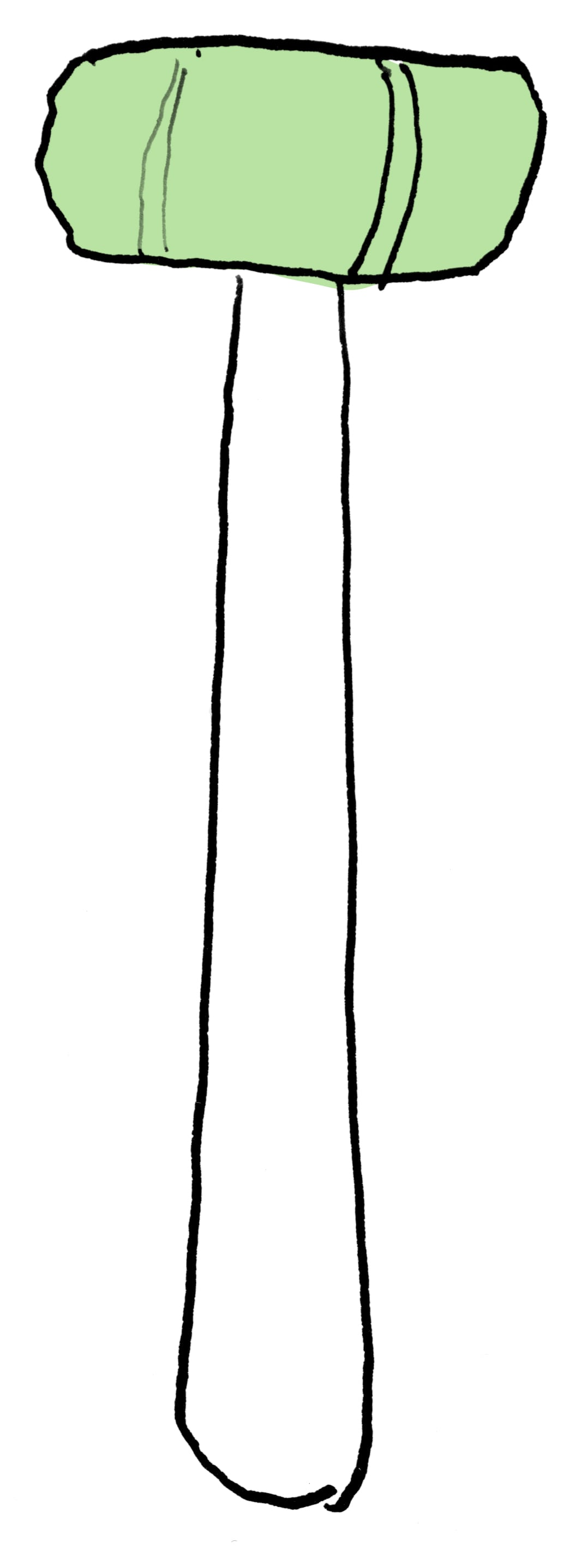
The solution eventually came in the form of a nylon stretch fabric commonly used in medical supports and corsets, combining stretch with a high level of support.
It stretches horizontally while offering very little stretch vertically.
This characteristic became one answer to a challenge that had existed since the beginning of development: reducing bounce.
Prototypes made from this material were repeatedly tested by ambassador Akito Nagao.
Validation took place during races such as KAGASPA Trail Endurance100 by UTMB, the Kitakyushu Hiraodai Trail Running Race in rainy conditions, and Ultra-Trail Australia by UTMB, as well as throughout everyday training.
He also wore the prototypes for extended periods in daily life, conducting tests directly against the skin and evaluating performance under load.
By paying attention not only to the time spent running, but also to the hours surrounding it, he continued searching for even the slightest discomfort or change in sensation.
That accumulation of observations helped refine the product further.
After extensive testing, Akito finally gave it his approval, and the material was selected as the main fabric for the T2 Ultra Belt.
In the next chapter, we will explore the final element that shapes fitting: the adjuster.
As mentioned previously, the initial mock-ups were developed using the same 4-way stretch fabric employed in the T2 Ultra 10. While the fabric provided a comfortable fit, it also revealed a problem. When soft flasks were inserted, the material deformed around the contents, and bounce could not be sufficiently controlled.
Various materials—including power mesh and woven fabrics—were tested, but none fully met the requirements.
The solution eventually came in the form of a nylon stretch fabric commonly used in medical supports and corsets, combining stretch with a high level of support.
It stretches horizontally while offering very little stretch vertically.
This characteristic became one answer to a challenge that had existed since the beginning of development: reducing bounce.
Prototypes made from this material were repeatedly tested by ambassador Akito Nagao.
Validation took place during races such as KAGASPA Trail Endurance100 by UTMB, the Kitakyushu Hiraodai Trail Running Race in rainy conditions, and Ultra-Trail Australia by UTMB, as well as throughout everyday training.
He also wore the prototypes for extended periods in daily life, conducting tests directly against the skin and evaluating performance under load.
By paying attention not only to the time spent running, but also to the hours surrounding it, he continued searching for even the slightest discomfort or change in sensation.
That accumulation of observations helped refine the product further.
After extensive testing, Akito finally gave it his approval, and the material was selected as the main fabric for the T2 Ultra Belt.
In the next chapter, we will explore the final element that shapes fitting: the adjuster.
Saori Hase
Saori Hase, born in Kobe, Hyogo, now lives in Fujisawa, Kanagawa.
Her light footwork and curiosity, cultivated through surfing, hiking, and years as a select shop staff member, led her to trail running after relocating to the Kanto region in 2019.
That same year, she was introduced to trail running through participation in “Madarao Forest Trails,” where she became drawn to the appeal of running in the mountains.
In 2022, she left her apparel company in pursuit of a more wellness-oriented lifestyle.
After taking on “Mt. FUJI 100,” a race she had long aspired to complete at least once, she began stepping further into the world of ultra-distance running.
Guided by the motto “When in doubt, choose what feels fun,” she continues to expand her connections with communities and people, while steadily building her days at her own pace alongside her pursuit of 100-mile races.
She is also active as the second-generation host of the popular trail running podcast “Sakamichi.”
Instagram


Saori Hase
Saori Hase, born in Kobe, Hyogo, now lives in Fujisawa, Kanagawa.
Her light footwork and curiosity, cultivated through surfing, hiking, and years as a select shop staff member, led her to trail running after relocating to the Kanto region in 2019.
That same year, she was introduced to trail running through participation in “Madarao Forest Trails,” where she became drawn to the appeal of running in the mountains.
In 2022, she left her apparel company in pursuit of a more wellness-oriented lifestyle.
After taking on “Mt. FUJI 100,” a race she had long aspired to complete at least once, she began stepping further into the world of ultra-distance running.
Guided by the motto “When in doubt, choose what feels fun,” she continues to expand her connections with communities and people, while steadily building her days at her own pace alongside her pursuit of 100-mile races.
She is also active as the second-generation host of the popular trail running podcast “Sakamichi.”
Instagram
Heisuke Kitazawa
Heisuke Kitazawa, born in Yokohama, now lives in Kawasaki.
An illustrator and author, he spent 16 years living in the United States before returning to Japan, where he began his career as an illustrator.
He has created illustrations across a wide range of fields, including book covers, packaging for Western confectionery brand Francais, products for Afternoon Tea and Sanrio, and menu visuals for COCO’S.
In 2026, he received the 41st Tsubota Joji Literary Award for Unicorn Letter Story (Shueisha / Home-sha).
His other works include Shiori to Mekuri: Heisuke Kitazawa Works (PIE), Yukai Yokai Note (Shogakukan), Hige ga Nagasugiru Neko (Kodansha), and Rucola no Chiisana Sagashimono-ya-san (Hakusensha).
Instagram
Official website : www.hypehopewonderland.com


Heisuke Kitazawa
Heisuke Kitazawa, born in Yokohama, now lives in Kawasaki.
An illustrator and author, he spent 16 years living in the United States before returning to Japan, where he began his career as an illustrator.
He has created illustrations across a wide range of fields, including book covers, packaging for Western confectionery brand Francais, products for Afternoon Tea and Sanrio, and menu visuals for COCO’S.
In 2026, he received the 41st Tsubota Joji Literary Award for Unicorn Letter Story (Shueisha / Home-sha).
His other works include Shiori to Mekuri: Heisuke Kitazawa Works (PIE), Yukai Yokai Note (Shogakukan), Hige ga Nagasugiru Neko (Kodansha), and Rucola no Chiisana Sagashimono-ya-san (Hakusensha).
Instagram
Official website: www.hypehopewonderland.com