

Journal
Stories, ideas, and field notes from T2.

Inside the Design
— The thinking behind T2 gear
Text by Saori Hase
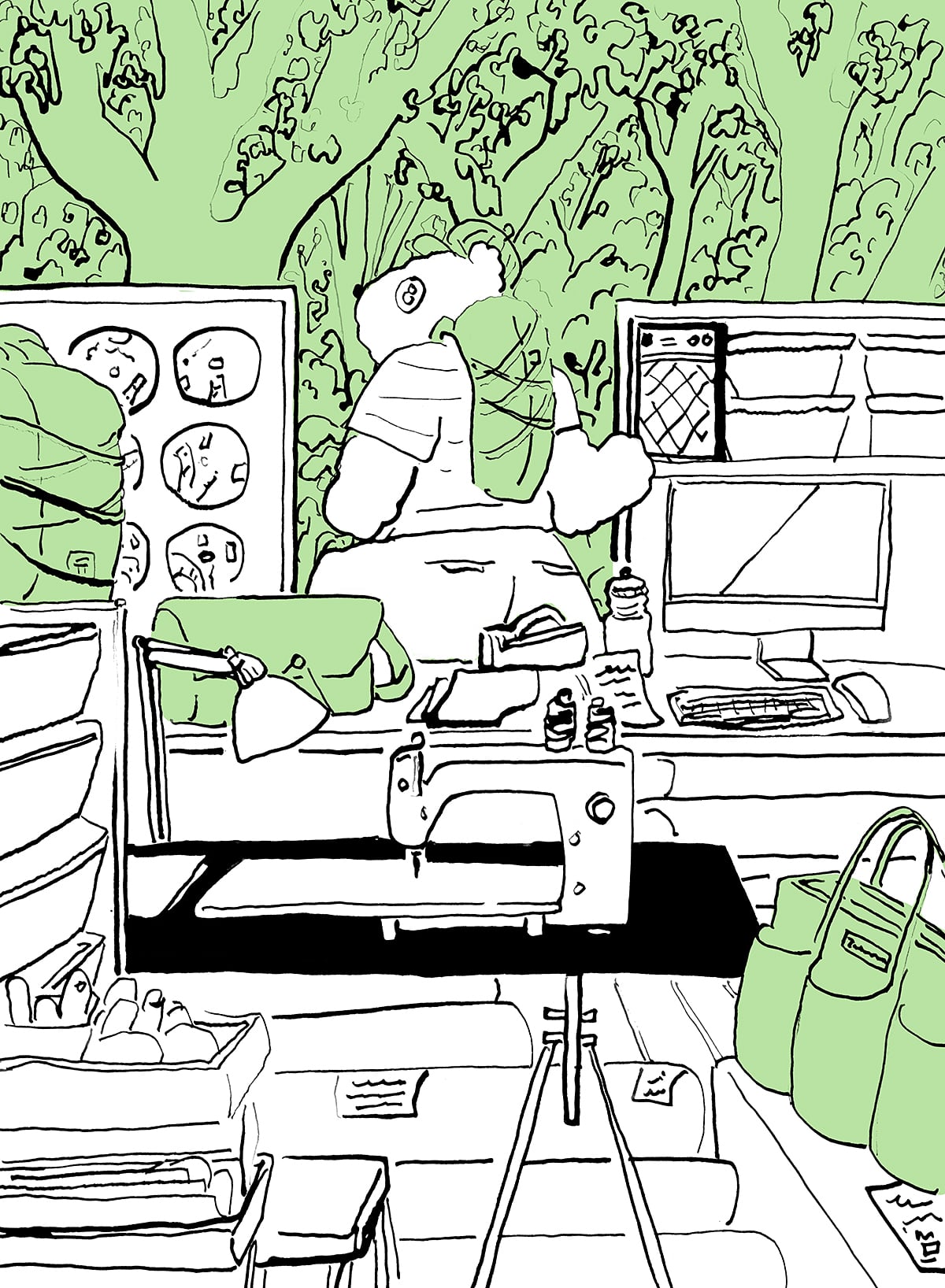
Illustration by Heisuke Kitazawa
“Inside the Design” is a continuing series by writer Saiori Hase,
who has developed her own perspective on design
through many years of working in fashion and is also an ultrarunner herself.
Through the lens of design, she examines the products created by Tabisuke Tabizo.
From the development of technologies and pattern engineering
in pursuit of an optimal fit to the selection of materials and colors,
and even the choice of sewing methods,
the series explores the “Inside”—the inner workings—of the design process
taking place at the atelier in Kita-Kamakura.
In Chapter 3 of Episode 1, she takes a closer look inside
the newly developed adjustment system, T2 Quick Bind™.
“Inside the Design” is a continuing series by writer Saiori Hase, who has developed her own perspective on design through many years of working in fashion and is also an ultrarunner herself. Through the lens of design, she examines the products created by Tabisuke Tabizo.
From the development of technologies and pattern engineering in pursuit of an optimal fit to the selection of materials and colors, and even the choice of sewing methods, the series explores the “Inside”—the inner workings—of the design process taking place at the atelier in Kita-Kamakura.
In Chapter 3 of Episode 1, she takes a closer look inside the newly developed adjustment system, T2 Quick Bind™.
Episode 1
T2 Ultra Belt
Chapter 3: T2 Quick Bind™

In early summer 2026, the rainy season and a typhoon converged, and rain was coming down in sheets outside.
I was so absorbed in the final task of securing the cords on the T2 Ultra Belt that I barely heard the sound of the rain.
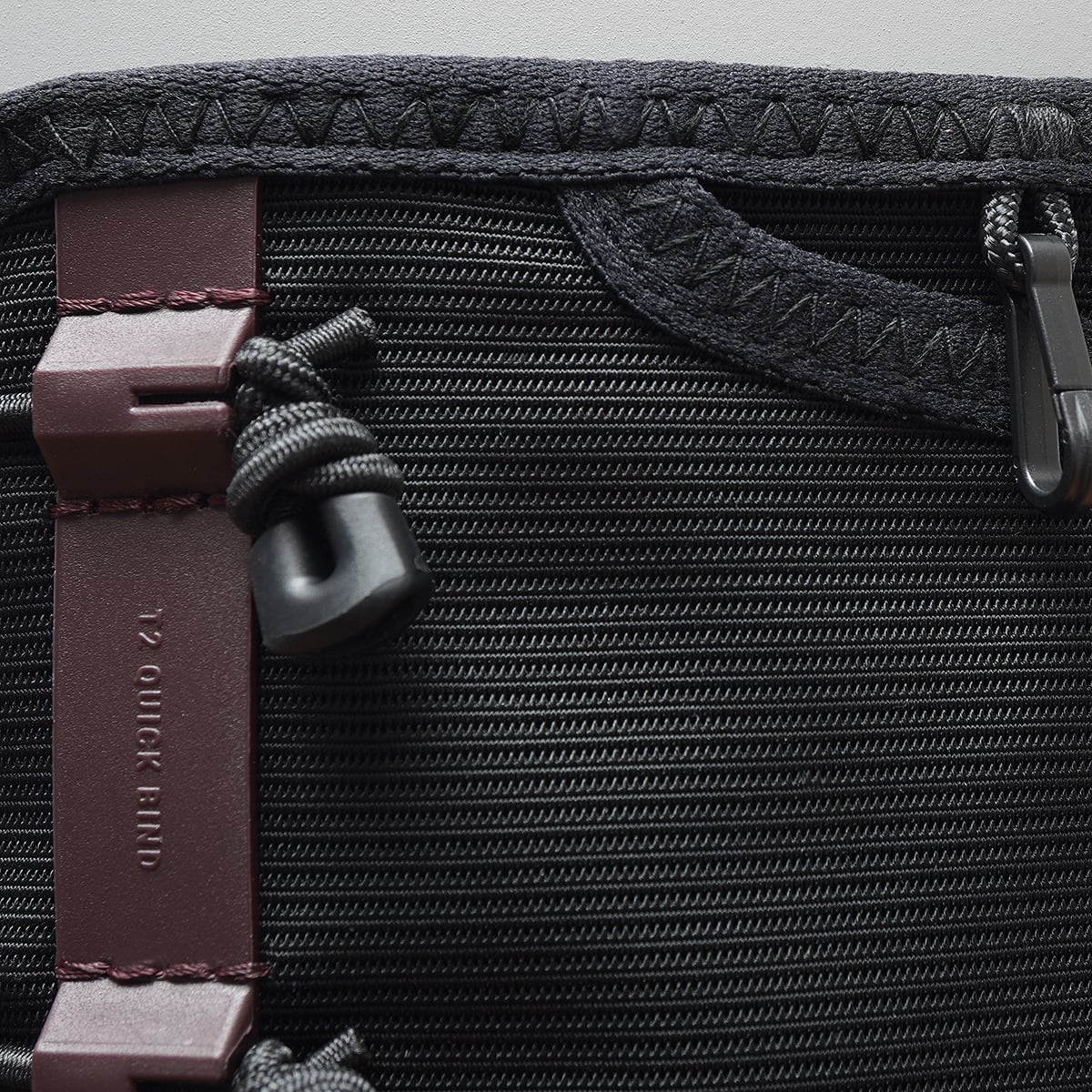
I threaded the elastic cords through T2 Quick Bind™, the new adjustment system, applying just the right amount of tension, keeping everything evenly balanced, and tying each cord firmly in place.
The knot is slightly unusual, and when someone told me, “You’re so good at tying these!” I continued working cheerfully, my nostrils flaring with pride.
I was so absorbed in the final task of securing the cords on the T2 Ultra Belt that I barely heard the sound of the rain.
I threaded the elastic cords through T2 Quick Bind™, the new adjustment system, applying just the right amount of tension, keeping everything evenly balanced, and tying each cord firmly in place.
The knot is slightly unusual, and when someone told me, “You’re so good at tying these!” I continued working cheerfully, my nostrils flaring with pride.
Searching for a
New Adjustment System
Alongside the selection of the main fabric was the second element discussed in the previous chapter: how could the adjuster we envisioned actually be made to function?
This proved to be the most difficult challenge.
How could it follow the body through its constantly changing movements and maintain the desired fit? Without sufficient vertical rigidity, the Belt would inevitably bounce.
Using various materials available in the atelier, the team experimented with components that could provide both rigidity and ease of fabrication, but achieving both proved far more difficult than expected.
This proved to be the most difficult challenge.
How could it follow the body through its constantly changing movements and maintain the desired fit? Without sufficient vertical rigidity, the Belt would inevitably bounce.
Using various materials available in the atelier, the team experimented with components that could provide both rigidity and ease of fabrication, but achieving both proved far more difficult than expected.

Akito Nagao, a Product Advisor who had been testing the Belt since the early stages of development, recalled with a laugh:
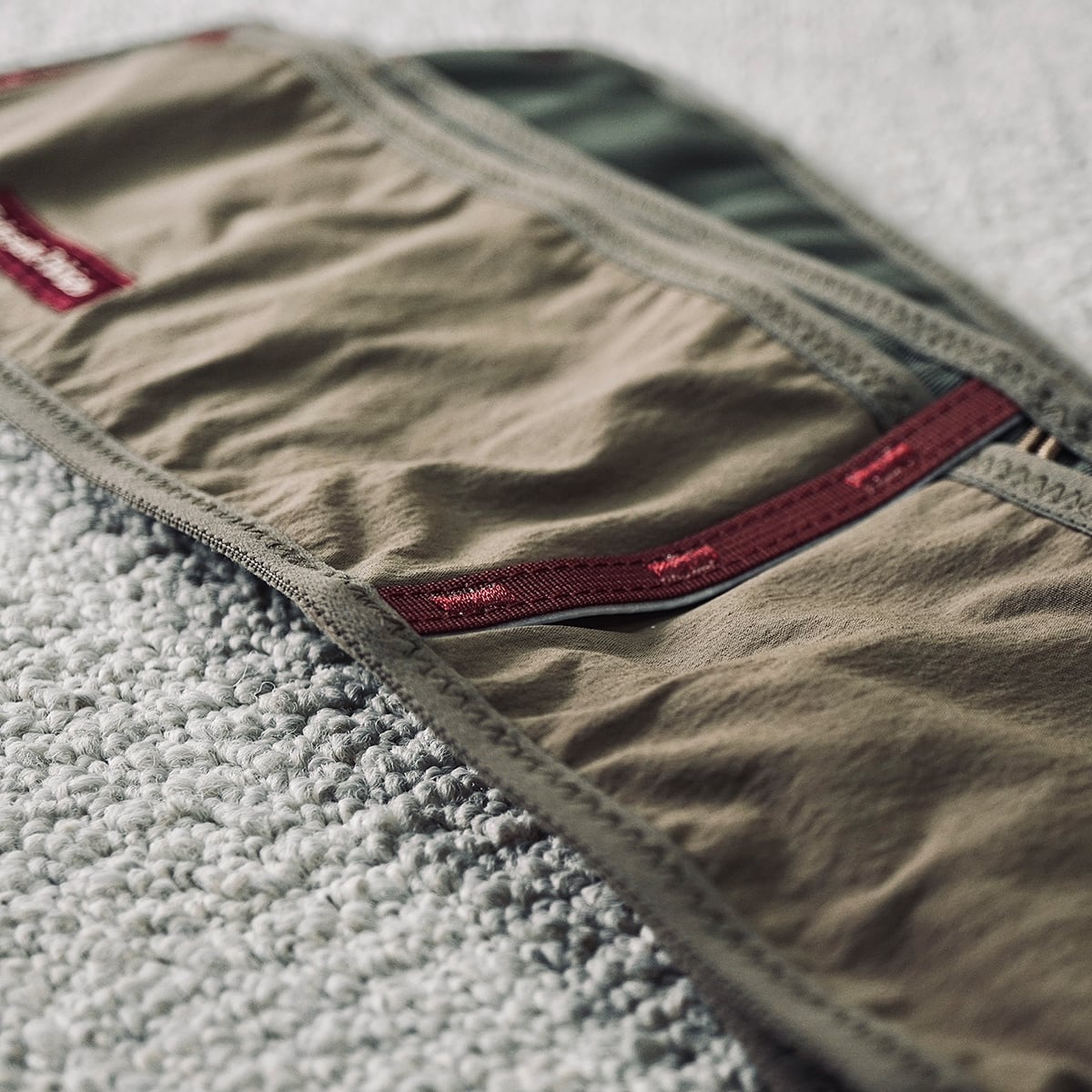
“The original reinforcement component gradually curled after washing, which changed how it felt when worn. It was interesting to experience.”
“The original reinforcement component gradually curled after washing, which changed how it felt when worn. It was interesting to experience.”
The Birth of T2 Quick Bind™
If the right component doesn’t exist, why not make one?
Reaching that decision could hardly have been as simple as the words make it sound. Even so, Tabisuke Tabizo chose to create the component itself, despite the considerable cost required to develop a single piece of gear.
I love that uncompromising commitment—the determination to keep searching rather than give up, and to pursue an original solution in its own way.
With the cooperation of Komori Plastic Industry Co., Ltd. in Uki, Kumamoto, the team repeatedly tested different material formulations using industrial 3D printing before finally arriving at the answer.
The material’s formal name is “dynamically cross-linked olefin-based thermoplastic elastomer,” or TPV.
It is such a difficult name that I cannot imagine ever memorizing it.
T2 Quick Bind™ takes its inspiration from T2 High Mount Fit™ 2.0, the proprietary technology used in the T2 Ultra Series, and gives physical form to a structure that further secures and holds the Belt in place.
Reaching that decision could hardly have been as simple as the words make it sound. Even so, Tabisuke Tabizo chose to create the component itself, despite the considerable cost required to develop a single piece of gear.
I love that uncompromising commitment—the determination to keep searching rather than give up, and to pursue an original solution in its own way.
With the cooperation of Komori Plastic Industry Co., Ltd. in Uki, Kumamoto, the team repeatedly tested different material formulations using industrial 3D printing before finally arriving at the answer.
The material’s formal name is “dynamically cross-linked olefin-based thermoplastic elastomer,” or TPV.
It is such a difficult name that I cannot imagine ever memorizing it.
T2 Quick Bind™ takes its inspiration from T2 High Mount Fit™ 2.0, the proprietary technology used in the T2 Ultra Series, and gives physical form to a structure that further secures and holds the Belt in place.

Its name immediately communicates what it does: it provides quick access and allows the fit to be adjusted.
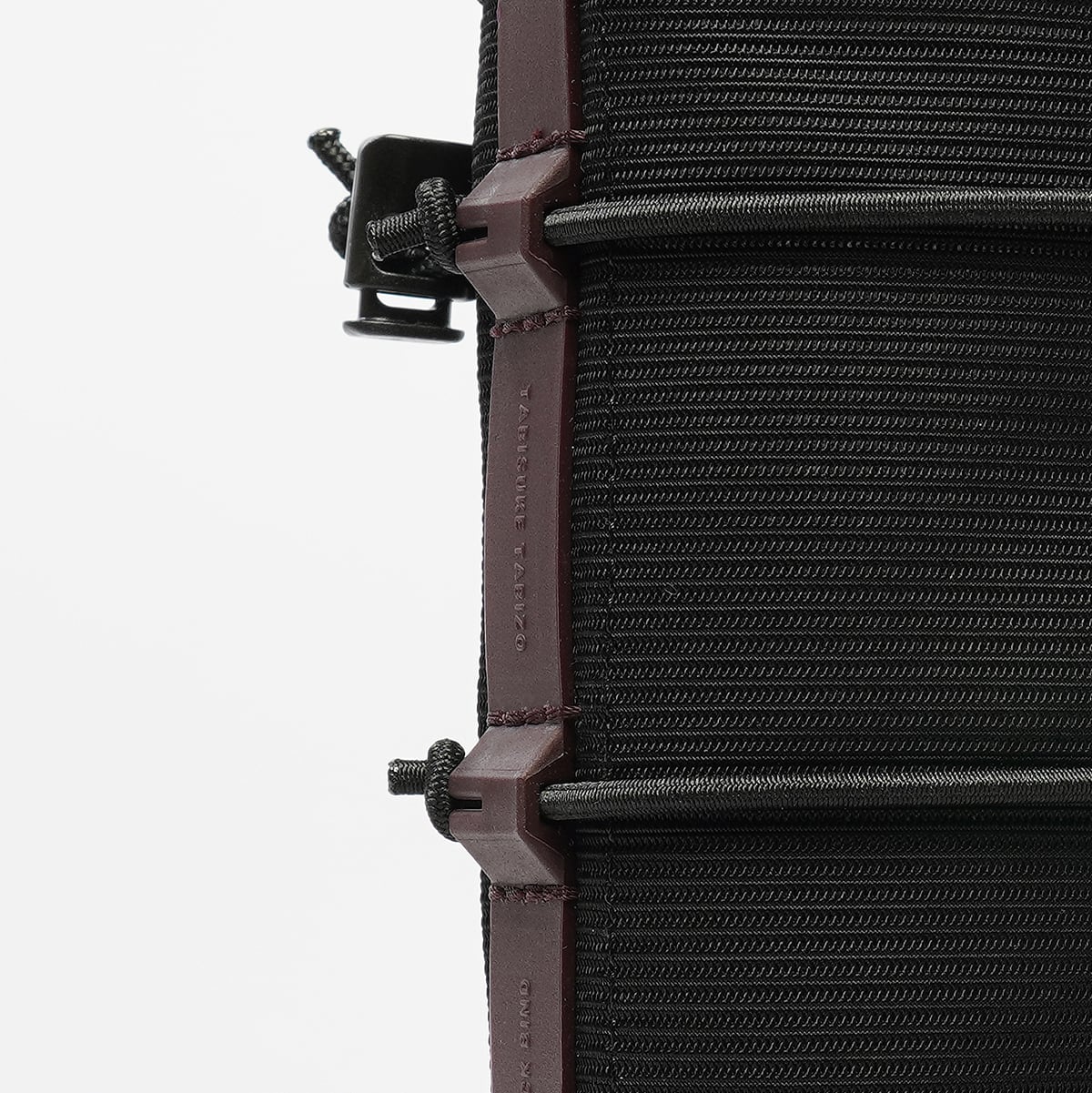
Designed specifically for elastic cords, the component has a raised profile that also gives it strength against pressure from above. Its trapezoidal, pyramid-like form was inspired by corrugated panels. A supporting column underneath reinforces the structure, while also preventing the elastic cord running across it from shifting around.
The material has been carefully tuned to retain its elasticity while remaining firm enough to hold its shape and soft enough for a sewing needle to pass through.
Looking closely at the beautiful burgundy component in my hand, I found myself thinking again about how much experimentation it must have taken to finally arrive at this material.
Designed specifically for elastic cords, the component has a raised profile that also gives it strength against pressure from above. Its trapezoidal, pyramid-like form was inspired by corrugated panels. A supporting column underneath reinforces the structure, while also preventing the elastic cord running across it from shifting around.
The material has been carefully tuned to retain its elasticity while remaining firm enough to hold its shape and soft enough for a sewing needle to pass through.
Looking closely at the beautiful burgundy component in my hand, I found myself thinking again about how much experimentation it must have taken to finally arrive at this material.
The Freedom of Fit
Enabled by T2 Quick Bind™
The longer an activity continues, the more the body’s preferred fit changes. A tight fit that feels comfortable at the start may, strangely enough, give way to a desire for something more relaxed later on.
The three cords threaded through T2 Quick Bind™ are secured at six points across the front and rear of the Belt. Rather than adjusting in only one direction, both the front and rear can be fine-tuned independently whenever needed—another thoughtful detail from the user’s perspective.
In the next chapter, I will share my impressions of the T2 Ultra Belt.
The three cords threaded through T2 Quick Bind™ are secured at six points across the front and rear of the Belt. Rather than adjusting in only one direction, both the front and rear can be fine-tuned independently whenever needed—another thoughtful detail from the user’s perspective.
In the next chapter, I will share my impressions of the T2 Ultra Belt.

Saori Hase
Saori Hase, born in Kobe, Hyogo, now lives in Fujisawa, Kanagawa.
Her light footwork and curiosity, cultivated through surfing, hiking, and years as a select shop staff member, led her to trail running after relocating to the Kanto region in 2019.
That same year, she was introduced to trail running through participation in “Madarao Forest Trails,” where she became drawn to the appeal of running in the mountains.
In 2022, she left her apparel company in pursuit of a more wellness-oriented lifestyle.
After taking on “Mt. FUJI 100,” a race she had long aspired to complete at least once, she began stepping further into the world of ultra-distance running.
Guided by the motto “When in doubt, choose what feels fun,” she continues to expand her connections with communities and people, while steadily building her days at her own pace alongside her pursuit of 100-mile races.
She is also active as the second-generation host of the popular trail running podcast “Sakamichi.”
Instagram


Saori Hase
Saori Hase, born in Kobe, Hyogo, now lives in Fujisawa, Kanagawa.
Her light footwork and curiosity, cultivated through surfing, hiking, and years as a select shop staff member, led her to trail running after relocating to the Kanto region in 2019.
That same year, she was introduced to trail running through participation in “Madarao Forest Trails,” where she became drawn to the appeal of running in the mountains.
In 2022, she left her apparel company in pursuit of a more wellness-oriented lifestyle.
After taking on “Mt. FUJI 100,” a race she had long aspired to complete at least once, she began stepping further into the world of ultra-distance running.
Guided by the motto “When in doubt, choose what feels fun,” she continues to expand her connections with communities and people, while steadily building her days at her own pace alongside her pursuit of 100-mile races.
She is also active as the second-generation host of the popular trail running podcast “Sakamichi.”
Instagram
Heisuke Kitazawa
Heisuke Kitazawa, born in Yokohama, now lives in Kawasaki.
An illustrator and author, he spent 16 years living in the United States before returning to Japan, where he began his career as an illustrator.
He has created illustrations across a wide range of fields, including book covers, packaging for Western confectionery brand Francais, products for Afternoon Tea and Sanrio, and menu visuals for COCO’S.
In 2026, he received the 41st Tsubota Joji Literary Award for Unicorn Letter Story (Shueisha / Home-sha).
His other works include Shiori to Mekuri: Heisuke Kitazawa Works (PIE), Yukai Yokai Note (Shogakukan), Hige ga Nagasugiru Neko (Kodansha), and Rucola no Chiisana Sagashimono-ya-san (Hakusensha).
Instagram
Official website : www.hypehopewonderland.com


Heisuke Kitazawa
Heisuke Kitazawa, born in Yokohama, now lives in Kawasaki.
An illustrator and author, he spent 16 years living in the United States before returning to Japan, where he began his career as an illustrator.
He has created illustrations across a wide range of fields, including book covers, packaging for Western confectionery brand Francais, products for Afternoon Tea and Sanrio, and menu visuals for COCO’S.
In 2026, he received the 41st Tsubota Joji Literary Award for Unicorn Letter Story (Shueisha / Home-sha).
His other works include Shiori to Mekuri: Heisuke Kitazawa Works (PIE), Yukai Yokai Note (Shogakukan), Hige ga Nagasugiru Neko (Kodansha), and Rucola no Chiisana Sagashimono-ya-san (Hakusensha).
Instagram
Official website: www.hypehopewonderland.com